
Originally Posted On: https://www.theboxery.com/blog/why-the-right-shipping-box-still-beats-free-packaging-from-the-post-office/
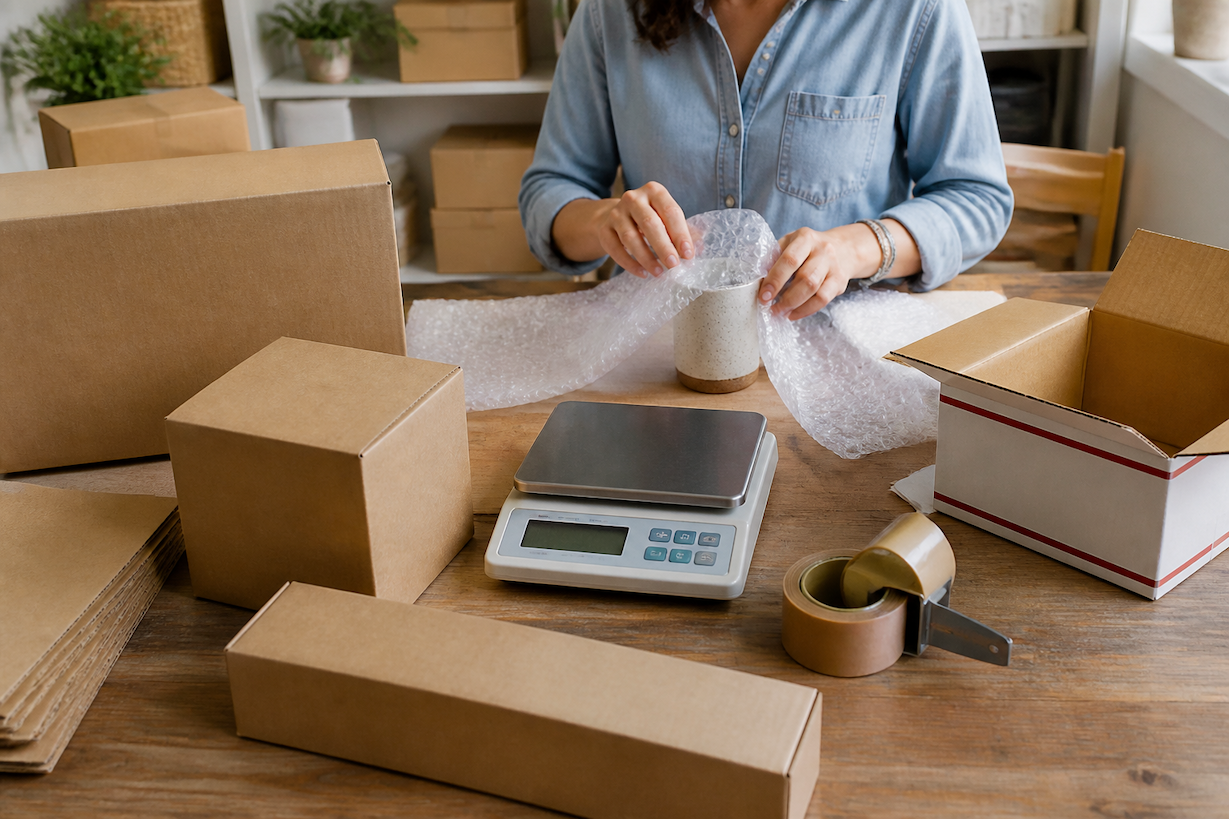
Key Takeaways
-
Free shipping boxes from USPS work only for flat rate mail — using them for retail products often costs more than buying the right-sized cardboard box outright.
-
Match box size to product dimensions first. Dimensional weight pricing from UPS and USPS punishes oversized shipping boxes even when they’re free.
-
Skip the Walmart, Home Depot, and Target runs. Buying shipping boxes in bulk online almost always beats grabbing single boxes at retail prices.
-
Corrugated cardboard handles most orders, but fragile electronics still need bubble or foam, and soft goods like clothing ship cheaper in poly mailers than boxes.
-
Set par levels for your most-used box sizes — 8x8x8 cubes, mailers, and one or two large sizes — so you’re never scrambling for shipping supplies mid-order.
-
A single packaging supplier that stocks small, large, and extra-large shipping boxes saves more time and money than juggling USPS, UPS, and three different stores.
Free is expensive more often than sellers want to admit. That flat rate box the post office hands over feels like a win until you’re stuffing a 6-ounce necklace into a container built for 5 pounds, paying for space you didn’t need. Grabbing whatever’s lying around the stockroom isn’t a shipping box strategy — it’s a gamble on your margins.
Here’s what most people miss: the box itself is one of the highest hidden costs in running a small store on Etsy, eBay, or Amazon. Get the size wrong and dimensional weight charges eat your profit before the package even leaves the building. Get the material wrong, and you’re refunding a customer for a cracked mug instead of banking that sale.
Sellers moving under 500 orders a month don’t have the luxury of guessing. You need the right cardboard, the right poly mailer, the right dimensions — not whatever’s free that week at the counter. Realistically, building a real packaging system beats scavenging for boxes every single time. That’s the difference between a store that scales and one that stalls out chasing free supplies that were never really free.
Free Shipping Boxes vs. Buying Your Own: What Actually Saves Money
Picture a seller shipping 40 orders a week, grabbing free Priority Mail boxes because they’re free. The problem? Every order that doesn’t fit a flat rate size perfectly means paying for space you don’t need. That’s the trap — free isn’t free once you factor in wasted volume. A properly sized shipping box often beats a flat rate option once you run real numbers.
What USPS Flat Rate Boxes Really Cost You Long-Term
Flat rate only wins when your item is heavy and small. Ship anything light or oddly shaped, and you’re overpaying every single time — that adds up fast across hundreds of orders. Knowing how to avoid overpaying for shipping boxes starts with matching box size to product, not grabbing whatever’s free at the counter.
When Free Boxes from UPS or the Post Office Make Sense
Free boxes work fine for heavy, dense items — books, tools, metal parts. Otherwise, skip them.
Why Sellers Shipping Under 500 Orders a Month Need a Different Strategy
At low volume, you can’t absorb wasted postage. Buy the right sizes instead of settling for whatever’s on the shelf.
Where Small Sellers Actually Find Shipping Boxes Near Me
Most sellers grab whatever’s closest before they’ve done the math. That’s a mistake. A quick search for shipping boxes nearby will turn up big-box retailers, office chains, and shipping carriers — but none of them stock the range a real e-commerce operation needs on a weekly basis.
Shipping Boxes at Walmart, Home Depot, and Target: Pros and Cons
Walmart shipping boxes and shipping boxes at Target are fine in a pinch — you can grab a handful on your lunch break. Home Depot leans toward moving-size cartons, not the compact sizes apparel or jewelry sellers need. The catch? Limited sizes, retail markup, and zero bulk pricing.
Buying Single Shipping Boxes vs. Ordering in Bulk Online
Hunting for where to buy single shipping boxes works for a one-off sale. But once you’re past 20-30 orders a month, it’s cheaper (and faster) to order buy shipping boxes online in cases instead of driving store to store.
Why Amazon Shipping Boxes Aren’t Built for Resellers
Amazon shipping boxes are designed for Amazon’s own fulfillment, not your product line — sizes are inconsistent and rarely match what you’re shipping. Sourcing dedicated boxes for shipping gets you sizes built for your actual products.
Shipping Box Sizes Explained: Small, Large, and Extra Large Options
Ever grabbed a random box off the shelf and realized halfway through packing it’s way too big for what you’re shipping? That’s the mistake that quietly drains margins for small sellers. Boxes generally fall into small, medium, large, and extra-large tiers — and picking the wrong one means paying for dead air. Browse a full shipping supplies overview before you buy so you’re comparing real dimensions, not guessing.
Standard Cube Sizes Like 8x8x8 and When to Use Them
The 8x8x8 cube is a workhorse size — great for candles, mugs, small electronics, or a stack of tees. Cube boxes stack cleanly on shelves — in trucks, which matters if you’re storing inventory in a spare room.
Post Office Box Sizes and Prices Compared to Retail Corrugated Boxes
Flat rate options work fine for heavy, small items — for lighter or oddly shaped products, retail corrugated boxes almost always cost less. If you ship often, buying shipping boxes bulk beats restocking free boxes one at a time.
Extra Large Shipping Boxes for Bulky or Oversized Products
For bedding, décor, or bundled orders, extra-large boxes prevent crushed corners and split seams that cheap alternatives can’t handle.
Cardboard, Corrugated, and Plastic: Picking the Right Box Material
About 95% of everything shipped in the U.S. moves in some form of corrugated cardboard — it’s the default for a reason. But not all corrugated is built the same, and picking the wrong one costs you either money or broken merchandise.
Standard Corrugated Cardboard for Everyday Packages
Single-wall, 32 ECT board handles most everyday items up to about 65 lbs — books, clothes, small electronics, that sort of thing. It’s affordable, it’s recyclable, and if you’re watching every dollar, cheap shipping boxes in mixed sizes let you cover odd-shaped products without paying full price for each one.
When Heavy-Duty Double-Wall Boxes Are Worth the Extra Cost
Shipping anything dense — ceramics, tools, bulk inventory — needs double or triple-wall board. Yes, it costs more. But one crushed shipment and a refund wipes out what you’d have saved on ten boxes. Not worth the gamble.
Poly Mailers and Plastic Alternatives for Non-Fragile Items
Apparel, soft goods, and non-breakables don’t need a box at all. Poly mailers weigh next to nothing, cutting postage costs, and they’re waterproof to boot. Skip the cardboard entirely when there’s nothing inside that can break.
Cutting Real Shipping Costs Without Relying on Free Supplies
Free boxes aren’t actually free once you factor in what they cost you elsewhere. That’s the part nobody mentions. A free USPS box locks you into fixed dimensions you didn’t choose, and if your product doesn’t fill it, you’re padding empty space or eating a rate bump you never saw coming.
How Box Size Affects UPS and USPS Dimensional Weight Rates
Carriers charge dimensional weight based on length times width times height — not just what the scale reads. Ship a 2-lb item in an oversized box, and you might get billed for 8 lbs. That’s real money, every single shipment, forever.
Bulk Buying Cheap Shipping Boxes Without Overspending on Storage
Buying in bulk beats one-off retail runs, but only if you pick sizes that actually match your product line. Check boxes for sale in assorted sizes — you’ll cut cost per unit without renting extra shelving for boxes you’ll rarely use.
Free Shipping on Mailers: A Hidden Way to Cut Costs
Poly and corrugated mailers ship flat, weigh almost nothing, and often come with free delivery on the mailers themselves. For non-fragile items, that’s a bigger margin win than any free flat-rate box.
Matching the Box to What You’re Actually Shipping
Picture a seller packing three orders on the same afternoon: a hoodie, a set of wine glasses, and a cast iron skillet. Grab one flat-rate box for all three and you’ll either overpay or under-protect something. The box needs to match the product, full stop.
Clothing, Shoes, and Soft Goods: Mailers Over Boxes
Apparel doesn’t need rigid walls. A poly mailer or padded mailer weighs almost nothing, cuts postage costs, and still keeps shirts and shoes clean and dry. Save the cardboard for things that can actually crush.
Electronics and Fragile Items: Why Styrofoam and Bubble Still Matter
Glassware, small electronics, ceramics — these need cushioning, not just a container. Bubble wrap or styrofoam inserts stop shifting during transit, and that’s what actually prevents breakage claims. Skimping here costs more in refunds than it saves in materials.
Home Goods, Tools, and Bulk Products That Need Sturdier Cartons
Heavier items — tools, kitchenware, bulk product runs — need double-wall strength, not the thin single-wall stock free bins offer. If you’re stocking up for a busy month, browsing shipping boxes for sale in mixed sizes gets you sturdy options without guessing wrong on every order.
Building a Reliable Packaging Supply System for Your Store
Running out of boxes on a Tuesday afternoon with 40 orders waiting isn’t a supply problem — it’s a planning failure. A real supply system means knowing your average weekly order count, matching it to your most-used sizes, and reordering before the shelf gets bare. Small sellers who scramble store to store lose hours they don’t have.
Setting Par Levels So You Never Run Out of Boxes Mid-Order
Pick your top three shipping box sizes and set a minimum count for each — say, 25 units triggers a reorder. Track it weekly. This is basic inventory math, not rocket science, and it saves you from midnight runs to whatever’s open.
Why a One-Stop Packaging Supplier Beats Juggling Walgreens, Walmart, and USPS Runs
Bouncing between five different stores for tape, mailers, and boxes wastes gas and time you should spend packing orders. Buying from one supplier that stocks everything — and understanding shipping box sizes before you order — keeps your process simple and your costs predictable.
Custom and Branded Boxes Once Your Order Volume Grows
Once you’re past a few hundred orders a month, plain kraft starts feeling generic. Adding a logo or color accent turns your packaging into free marketing — worth it once volume justifies the minimums.
Frequently Asked Questions
Where can I get a free box for shipping?
Carriers hand out free flat rate boxes at post office counters, but those only make sense if you’re using that specific flat rate service — grab the wrong size, and you’re overpaying for empty space. Grocery stores and liquor stores sometimes give away used boxes too, though quality is hit or miss and sizing is random. If you ship regularly, buying your own shipping boxes in bulk almost always works out cheaper per package than hunting for freebies.
What is the cheapest way to get shipping boxes?
Buying in case quantities from an online packaging supplier beats retail every time. A single box from an office supply store might run you a couple bucks, but that same box bought by the case can drop well under a dollar. If you’re shipping under 500 orders a month, look for suppliers with low minimums — you don’t need a pallet to get decent pricing.
What are shipping boxes called?
Most people just say “shipping boxes,” but in the industry they’re corrugated boxes or cartons. You’ll also see them labeled by strength — standard single-wall (32 ECT) for general merchandise, double or triple-wall for heavier or industrial loads. Mailers, by contrast, are the flat, self-locking cousins of the traditional box — different product, different use case.
Is it cheaper to ship your own box or USPS box?
Depends entirely on the service. If you’re using Priority Mail Flat Rate, the USPS box is free, and the price is fixed regardless of weight — great for heavy, dense items. But if your product is light and doesn’t fill the box, your own right-sized box paired with a calculated-weight service is usually cheaper. Do the math on both before you default to one or the other.
What size shipping box do I actually need?
Measure your product, add an inch or two on each side for cushioning, and pick the closest match. Going bigger than that just means more void fill and, worse, dimensional weight charges from carriers who bill you for the box’s size, not just what’s inside. A 9x7x3 item shipped in a 12x12x12 box is money thrown away — every single time.
Can I buy shipping boxes in small quantities without paying retail prices?
Yes. Case quantities (usually 25 to 100 units depending on size) are the sweet spot for small sellers — you’re not committing to a full pallet, but you’re still getting bulk pricing instead of what a big box hardware store charges per unit. That’s the gap most small Etsy and eBay sellers get stuck in, and it’s worth shopping around to close it.
Do shipping boxes need to be new, or can I reuse old ones?
Reusing is fine for personal shipments, but for a business, it looks unprofessional, and old boxes lose crush strength every time they get compressed or wet. Corrugated cardboard weakens with reuse — the fluting flattens out. If you’re running a store, buy fresh stock; it protects your product and your brand image.
What’s the difference between cardboard shipping boxes and poly mailers?
Cardboard boxes protect against crushing and are a must for anything rigid, breakable, or boxed-shaped. Poly mailers are lighter, cheaper to ship, and better for soft goods like clothing or fabric that can bend without damage. Picking the wrong one costs you either protection or postage — know your product before you decide.
How do I know if I need standard or heavy-duty shipping boxes?
Standard 32 ECT boxes handle most general merchandise up to about 65 lbs — books, small electronics, household goods. Once you’re shipping dense or heavy items, or anything traveling long distance through rough handling, step up to double-wall or triple-wall construction. Skimping here is how you end up with crushed corners and angry customers.
Free flat-rate boxes look like a win until you actually run the math on dimensional weight and wasted space. That’s the trap. A seller shipping 300 orders a month doesn’t need free — they need the right shipping box, sized correctly, bought in bulk at a price that protects margin instead of quietly eating it.
The sellers who get this right aren’t the ones hunting through big-box store aisles hoping the size they need is in stock. They’ve set par levels, they order before they’re empty, and they’ve picked one supplier who carries corrugated boxes, mailers, tape, and void fill under one roof. No more juggling three retail runs and a post office line just to fill one order.
Packaging isn’t the place to cut corners — it’s the place where damaged returns and bloated postage quietly drain profit nobody notices until the numbers don’t add up. Fix the box, and everything downstream gets easier: fewer returns, lower shipping bills, better reviews.
Stop guessing on sizes. Pull your last 20 orders, match them to real box dimensions, and place one bulk order built around what you actually ship — not what’s sitting free at the counter.


