
BuckleGuy Shows How Leather Goods Supplies Work Together From Raw Material to Finished Goods
Newburyport, United States – July 1, 2026 / Buckle Guy /
BuckleGuy Press Release
From Raw Material to Finished Goods, BuckleGuy Helps Makers Build With Better Fit, Function, and Finish
NEWBURYPORT, Mass., June 2026
BuckleGuy is highlighting a more practical way for makers, small businesses, and production buyers to plan leather goods supplies: treat leather, fasteners, and hardware as connected parts of the same build, not separate items added one by one.
For leatherworkers, the finished product depends on more than choosing a good piece of leather or a handsome piece of hardware. A bag strap needs to move correctly. A rivet needs to suit the material stack. A bolt snap needs to feel right in the hand. A panel needs enough structure to carry its shape. When those choices are reviewed together early, makers can build with better fit, clearer function, and a more intentional finish.
Think of it as good bench manners. The leather, hardware, and tools should all be introduced before the project gets serious.
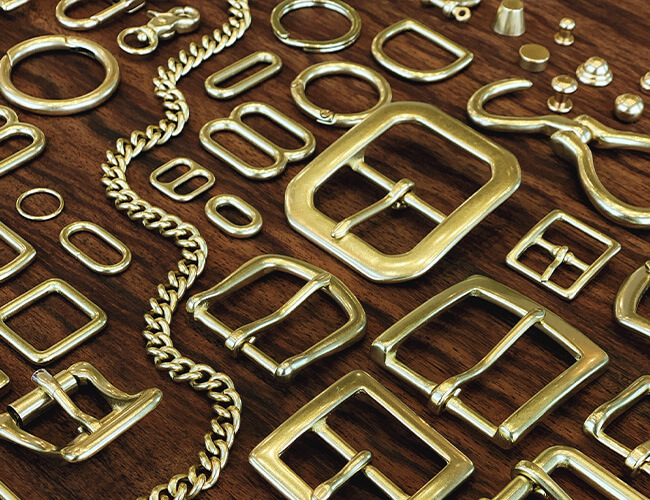
BuckleGuy supplies leather, solid brass hardware, leather working tools, fasteners, kits and patterns, and leathercraft materials for individual makers, small businesses, larger fashion companies, and manufacturers. The company’s planning-first approach helps customers choose supplies based on how the finished item will actually be cut, assembled, handled, and used.
Planning Starts With the Leather
Leather sets the foundation for the build. It influences structure, hand feel, edge treatment, folding points, hardware placement, and long-term use. For bag making, straps, collars, wallets, briefcases, and accessories, the leather choice affects how every other component behaves.
Vegetable-tanned leather is often selected for projects that need structure, edge finishing, tooling, shaping, or a traditional leathercraft feel. It can be used for panels, straps, handles, tabs, pockets, reinforcements, and small goods. But choosing veg tan leather is not only about color or thickness. Makers also need to consider where layers overlap, where stress points will occur, and how the leather will interact with rivets, snaps, buckles, rings, or bolt snaps.
For example, a tote bag panel may need enough body to hold its shape, while a shoulder strap may need a different balance of firmness and flexibility. A wallet pocket may need thinner leather at folded areas, while a handle tab may need reinforcement behind a rivet or ring. Same material family, different assignments.
BuckleGuy supplies leather selected from vegetable-tan and chrome-tan tanneries in the United States and around the world. The company also sells leather without order minimums, giving individual makers and businesses room to test materials before moving into larger planning or repeat production.
That flexibility is especially helpful for makers developing new products. A panel, strap, side, shoulder, belly, or scrap assortment can each serve a different purpose in the sampling process. The right cut gives the maker enough usable material, room to test, and a clearer path from idea to finished product.
For broader material context, leather is commonly understood as a flexible material made through tanning animal skins or hides.
Fasteners Need the Right Material Stack
Fasteners may be small, but they do not enjoy being treated as an afterthought.
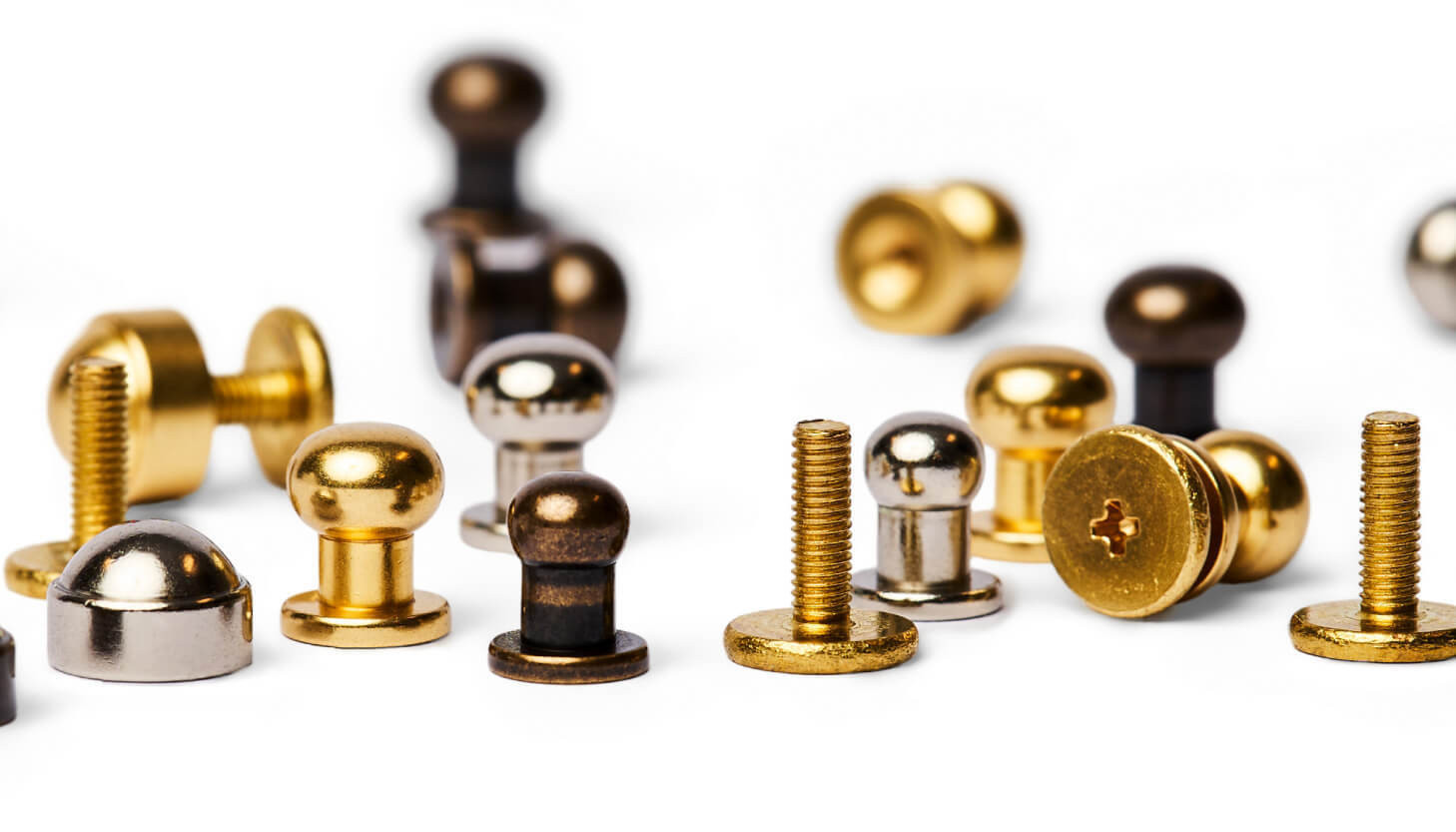
Double cap rivets are commonly used where leather layers need a finished appearance on both sides. They are a practical choice for straps, tabs, handles, closures, reinforcements, and visible attachment points. Because both sides of the rivet have a cap, they can help create a clean finished look when the front and back of the fastener remain visible.
The important part is fit. A rivet must match the full material stack at the setting point. That stack may include two layers of leather, a folded strap end, glue, lining, reinforcement, fabric, or skived areas. If the post is too short, the rivet may not form securely. If the post is too long, it may bend, lean, crush the leather, or create a bulky set.
A well-matched rivet supports the build. A poorly matched rivet tends to announce itself. Usually at the worst possible moment.
This is why BuckleGuy encourages makers to think about rivets as part of the construction plan. The correct fastener depends on material thickness, layer count, hole size, placement, setter choice, and expected use. For production buyers, that detail becomes even more important because the same fastening decision may need to repeat cleanly across many finished goods.
A rivet is generally described as a permanent mechanical fastener. For makers, that makes proper fit and setting even more important. A rivet is not just a cap color. It is a construction point. When it fits the leather properly, it helps the finished product look cleaner, feel more secure, and function as intended.
Bolt Snaps Bring Movement Into the Build
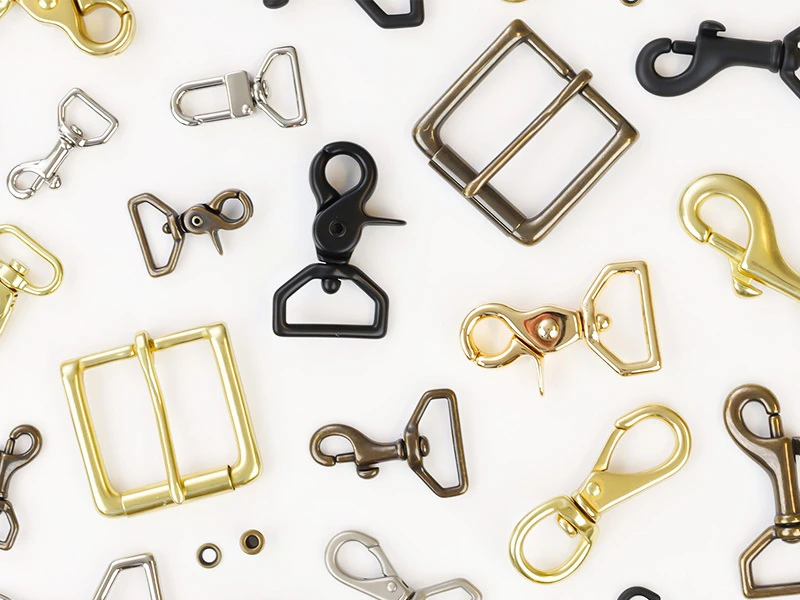
Bolt snaps add movement, interaction, and daily handling to leather goods. They are used where a finished piece needs to clip, connect, detach, swivel, or move with the user. Common applications include handbag straps, pet leashes, briefcases, key clips, pouches, removable handles, and accessory attachments.
For handbag hardware and pet leash hardware, a bolt snap is not merely decorative. It affects how the product opens, clips, carries, turns, and feels in use. A swivel bolt snap can allow a strap or leash to rotate naturally, reducing twist and helping the item move with the user instead of fighting the attachment point.
Strap width matters here. If the hardware is too narrow, the leather may pinch or bunch. If the hardware is too large, it may overpower the design or shift more than intended. The clip should suit the leather width, product scale, and expected handling.
For bags and detachable straps, the hardware must support movement. For leashes and pet accessories, the clip must be comfortable to operate and visually in scale with the build. For briefcases and structured leather goods, hardware should feel orderly and consistent with the formal lines of the piece. For small accessories, the hardware should open cleanly without taking over the design.
In short, the hardware should do the job it was hired to do. No freelancing.
Solid Brass Hardware With a Practical Purpose
BuckleGuy manufactures solid brass hardware in its own factory, including components used in leather goods and accessories. The company’s product range includes brass buckles, swivel snaps, loops and sliders, rivets, snap fasteners, rings, magnetic snaps, purse closures, grommets, and key rings.
Solid brass hardware brings material presence to the bench. It has a substantial feel and is suitable for leather goods where appearance, handling, and long-term use all matter. BuckleGuy’s low-lead solid brass hardware is designed for makers who want hardware that feels connected to the finished piece, rather than added at the end because the project needed “something metal.”
The company also continues to develop new hardware items, finishes, styles, and manufacturing practices. For makers and production buyers, that matters because hardware choice often involves more than a single part. A bag may need bolt snaps, D-rings, rivets, buckles, and matching closures. A leash may require clip hardware, rings, rivets, and leather or webbing that all work together. A small accessory may need compact hardware that functions smoothly without crowding the design.
Brass is commonly described as an alloy of copper and zinc. The best hardware choice is rarely just the shiniest option. It is the one that fits the leather, suits the use, supports the construction, and looks like it belongs.
A Better Way to Review Build Compatibility
Finished leather goods are small systems. The leather, fasteners, moving hardware, tools, and finishing supplies all affect one another. Reviewing these choices together helps makers avoid common problems before they reach final assembly.
BuckleGuy recommends that makers and buyers ask a few practical questions early in the process:
- Does the leather match the intended structure and use of the finished item?
- Does the cut of leather provide enough room for panels, straps, tests, and reinforcements?
- Do the rivets or fasteners suit the full material stack?
- Does the moving hardware match the way the item will be clipped, carried, adjusted, or handled?
- Does the hardware size suit the strap width and leather weight?
- Do the finish, color, and visual weight of the parts feel consistent?
- Are the correct tools and setters included in the plan?
These are not abstract design questions. They are bench questions. They help makers understand how one choice affects the next.
For small businesses and production buyers, this compatibility check can make sampling more efficient. It can also help reduce surprises when moving from prototype to production. A detail that works once by accident may not work reliably across a larger run. A detail chosen carefully has a better chance of repeating well.
Supporting Makers at Different Stages
BuckleGuy serves a wide range of customers, from individual crafters to small businesses, large fashion corporations, and manufacturers. Each group may approach leathercraft supplies differently, but the underlying need is similar: materials and hardware should support the finished product.
A hobby maker may need a small leather panel, a few rivets, a setter, and hardware for one bag or wallet. A growing shop may need consistent leather cuts, matching hardware finishes, and reliable supply for repeat designs. A production buyer may need custom hardware, exact specifications, finish options, logo development, or manufacturing guidance.
BuckleGuy’s experience in custom hardware development helps support those different needs. The company can manufacture custom hardware products to exact specifications when a project requires a particular design, finish, logo, or production requirement. Its background also informs practical conversations around construction methods, alternative design ideas, and manufacturing considerations.
That is where the “cool professor” part comes in. The goal is not to make the process feel more complicated. The goal is to explain the details clearly so makers can make better decisions with more confidence.
About BuckleGuy
BuckleGuy is a leathercraft supplier and solid brass hardware manufacturer with a business presence in Newburyport, Massachusetts. Through buckleguy.com, the company supplies leather, leather working supplies, hardware for leather products, craft supplies, kits, and patterns to makers and manufacturers in the United States and internationally.
The company manufactures low-lead solid brass hardware in its own factory and continues to develop new hardware items, finishes, and styles for leathercraft, accessories, and production use. Its factory produces hardware including buckles, swivel snaps, loops and sliders, rivets, snap fasteners, rings, magnetic snaps, purse closures, grommets, and key rings.
BuckleGuy brings more than 75 years of experience in custom hardware development to its work with makers, brands, and manufacturers. The company’s approach is practical: help customers understand how leather, hardware, tools, and construction details work together so the finished product feels more considered from the first cut to the final set.
Media Information
For company and product information, including leather goods supplies, leathercraft materials, solid brass hardware, tools, kits, patterns, and custom hardware options, visit buckleguy.com.


Contact Information:
Buckle Guy
15 Graf Road
Newburyport, MA 01950
United States
Hugh Harriss
(978) 213-9989
https://www.buckleguy.com/


