
Key Takeaways
- Decline treadmills provide eccentric muscle training that standard flat treadmills cannot deliver, helping prevent injuries and prepare runners for real-world downhill terrain.
- The optimal decline range for most runners is -2% to -6%, with beginners starting at -1% to -2% and gradually progressing to steeper angles.
- Advanced impact reduction technology may reduce joint stress compared to outdoor pavement, making decline training safer.
- Top-rated commercial-grade decline treadmills offer up to -6% decline capability and lifetime warranties on frames and motors.
Running on flat surfaces or inclines only tells half the story of complete training. Every outdoor route includes downhill segments that challenge muscles differently than uphill climbs, yet most runners neglect this aspect of their preparation. Decline training fills this gap by strengthening the body through eccentric contractions, where muscles lengthen under load while controlling momentum.
Why Decline Training Is Necessary for Optimal Performance and Injury Prevention
Eccentric training builds resilient tissue that protects against repetitive stress injuries common in runners. When muscles work eccentrically during downhill running, they develop greater strength and explosive power compared to traditional concentric exercises. This type of training stimulates tissue adaptation and improves the body’s ability to tolerate repetitive loading, which helps reduce the risk of strains and tears that sideline many athletes.
Downhill running uniquely challenges the quadriceps and stabilizing muscles responsible for balance and control. Without proper preparation, runners often experience excessive soreness and potential injury when encountering steep descents.
The braking forces required during decline running engage neuromuscular pathways that remain underdeveloped through flat-surface training alone. This improved control transfers directly to enhanced performance on varied terrain, giving runners confidence and technical efficiency when facing challenging descents outdoors.
Optimal Decline Range for Eccentric Adaptations
Research indicates that decline angles between -2% and -6% provide sufficient training stimulus for eccentric adaptations without creating excessive joint stress. This range challenges the muscular and connective tissue systems while maintaining safety margins that prevent overuse injuries during training progressions.
Starting Points for Different Experience Levels
Beginner runners should initiate decline training at -1% to -2% decline for 10-15 minute sessions, starting with short, controlled sessions to allow gradual adaptation to eccentric loading patterns. Intermediate athletes can begin at -2% to -3% decline, while experienced runners may start at -3% to -4% depending on their current fitness level and injury history.
Progressive overload principles apply to decline training just as they do to other exercise modalities. Weekly increases of 0.5% decline angle or 2-3 minutes of duration provide appropriate advancement without overwhelming recovery systems.
Avoiding Common Decline Training Mistakes
The most frequent error involves progressing too quickly to steep decline angles, leading to excessive delayed-onset muscle soreness and potential injury. Runners often underestimate the intensity of eccentric contractions, treating decline sessions as recovery workouts rather than demanding training stimuli.
Another common mistake involves neglecting proper warm-up protocols before decline sessions. The unique neuromuscular demands of controlling downhill momentum require specific preparation to activate stabilizing muscles and establish proper movement patterns.
Top 3 Decline Treadmills Breaking Performance Barriers
Three treadmill models stand out for their decline capabilities, build quality, and training features that support complete eccentric training programs. Each offers distinct advantages depending on space constraints, budget considerations, and specific performance goals.
1. SOLE TT8: Commercial-Grade -6% Decline Leader
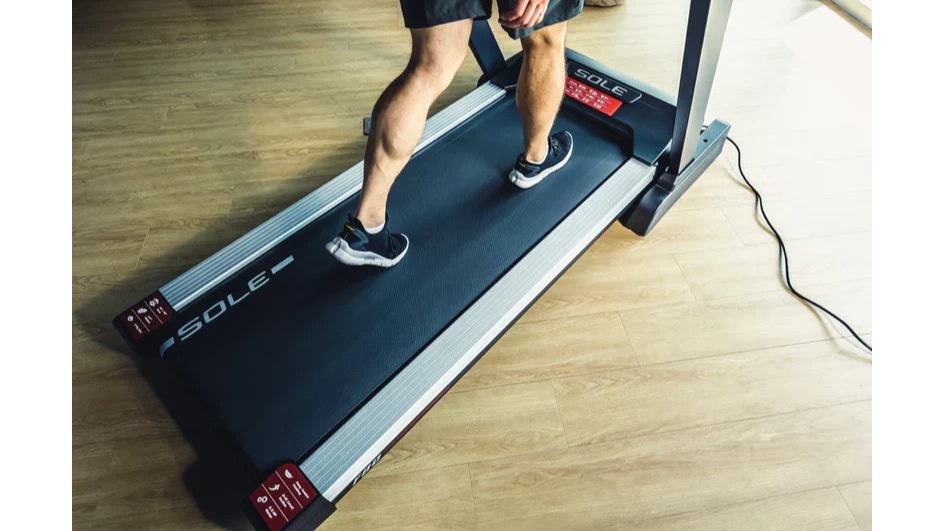
The SOLE TT8 delivers industry-leading -6% decline capability combined with commercial-grade construction designed for heavy daily use. Its 4.0 HP motor maintains consistent power throughout all elevation settings, while the 400-pound weight capacity accommodates athletes of all sizes.
This non-folding design prioritizes stability and durability over space-saving features. The reinforced steel frame handles the unique stresses of decline training without flexing or vibration that could compromise safety or performance. A lifetime warranty on both frame and motor demonstrates the manufacturer’s confidence in long-term reliability.
The TT8’s 22″ x 60″ running surface provides ample room for natural stride patterns during decline sessions, while variable speed control allows precise adjustment of training intensity throughout workouts.
2. SOLE F85: Space-Saving Premium Performance
The SOLE F85 combines the same -6% decline capability as the TT8 with Easy Assist folding technology for space-conscious athletes. This premium model maintains commercial-grade construction standards while incorporating convenience features that make it suitable for home environments with limited floor space.
Despite the folding mechanism, the F85’s reinforced frame maintains stability during decline training sessions. The 4.0 HP motor delivers consistent performance across all elevation settings, while the 375-pound weight capacity accommodates most serious athletes.
The folding design reduces storage footprint by approximately 50% when not in use, making it ideal for dedicated home gyms or multi-purpose training spaces that require equipment versatility.
3. NordicTrack Commercial 1750: Interactive Training Focus
The NordicTrack Commercial 1750 offers -3% decline alongside interactive training features that appeal to runners seeking guided workout experiences. While its decline range provides only half the eccentric training stimulus of SOLE models, it compensates with extensive entertainment and coaching options.
This model requires an iFIT subscription for full functionality, including access to trainer-led decline workouts and virtual running routes. The 4.25 CHP motor and 400-pound weight capacity match competitor specifications, though the limited decline range may not satisfy serious athletes focused on complete eccentric training.
Interactive features include automatic elevation adjustments synchronized with virtual terrain, creating engaging workout experiences that can help maintain training consistency for motivation-dependent athletes.
Impact Reduction Technology That Protects Your Joints
Advanced cushioning systems are critically important during decline training, where impact forces increase significantly compared to flat-surface running. The biomechanics of downhill running create greater landing forces that must be absorbed and dissipated to prevent joint stress accumulation.
Cushioned Decks
Modern deck technology employs variable-density cushioning zones that adapt to different phases of the running gait cycle. Firmer support at push-off points maintains energy return efficiency, while increased absorption in landing zones reduces peak impact forces.
Moreover, their quiet operation eliminates noise distractions that could interfere with proper running form during decline sessions. Acoustic designs also reduce vibration transmission through building structures, making them suitable for apartment or shared living environments.
Why Impact Reduction Matters for Decline Running
The claimed impact reduction provided by such technology is especially valuable during decline training, where forces can exceed those experienced during flat-surface running by 20-30%. This reduction may translate to decreased stress on knees, hips, and lower back structures that bear the brunt of eccentric loading.
Cumulative impact reduction over thousands of footstrikes during training cycles can mean the difference between consistent progress and injury-related setbacks. The technology allows athletes to train more frequently and at higher intensities while maintaining joint health throughout demanding preparation periods.
Real-World Performance Gains From Decline Training
Decline treadmill training produces measurable improvements that transfer directly to outdoor running performance, particularly in scenarios involving varied terrain and technical descents. These adaptations go beyond simple strength gains to include neuromuscular coordination and biomechanical efficiency improvements.
Eccentric muscle contractions during decline training strengthen not only the primary movers but also the stabilizing muscles and connective tissues that support joint integrity. This strengthening pattern reduces injury risk by preparing the body for the unpredictable forces encountered during outdoor running.
People who incorporate regular decline training report fewer overuse injuries, particularly those affecting the knee joint where eccentric quadriceps strength plays a protective role. The controlled environment allows progressive loading without the variability and potential hazards of outdoor downhill training – which is why decline-ready treadmills are becoming increasingly important to today’s runners.
SOLE Fitness
56 Exchange Pl.
Salt Lake City
UT
84111
United States


