New UltraStore Mini-Load ASRS, by ISD, announces its new automated tote and bin mini-load system designed to eliminate single‑point‑of‑failures.
WIXOM, MI, UNITED STATES, June 3, 2026 /EINPresswire.com/ — New UltraStore Mini-Load ASRS: Automated Tote Storage Eliminates Single‑Point‑Of‑Failures
WIXOM, MI – June 3, 2026 – ISD – Integrated Systems Design today introduced the New UltraStore Mini-Load ASRS, an automated tote and bin storage system that eliminates single-point-of-failure design inherent in traditional mini-load systems. Built on decades of UltraStore Mid-Load experience, the new system uses off-the-shelf components and floor-surface operations to help reduce both capital investment and long-term maintenance expenses.
The UltraStore Mini-Load ASRS delivers high-density and automated storage and retrieval without an embedded track. This design choice eliminates the need for precise floor leveling, accelerates installation, and provides system redundancy that keeps operations running during maintenance events.
“Traditional mini-load systems create dependencies that drive up costs and limit flexibility,” said Tony Morgott, President of ISD – Integrated Systems Design. “The embedded track becomes a single point of failure. Proprietary components mean expensive spare parts and long lead times. We designed the UltraStore Mini-Load to eliminate single-point-of-failure and spare parts issues.”
New UltraStore Mini‑Load ASRS Will Eliminate Single‑Point‑Of‑Failures
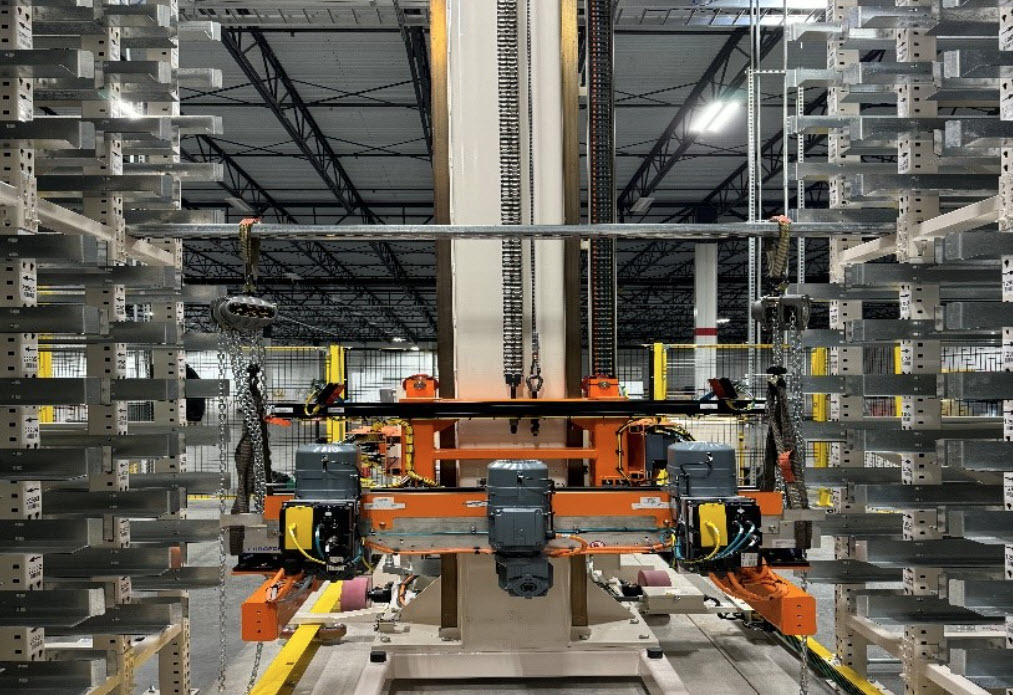
The UltraStore Mini-Load ASRS uses a crane-and-aisle design that rides on the floor surface rather than on embedded rails. This design change eliminates the largest factor in mini-load ASRS downtime. Crane redundancy means maintenance doesn’t stop production.
The UltraStore Mini-Load ASRS system is available with an extra crane for the system. If there is a need for maintenance or a problem with a crane in the system, users can simply push the Mini-Load crane out of the aisle and deploy the redundant crane. The extra crane can be up and running in just minutes. In addition, organizations can utilize an accessory that attaches to one of the forklifts, and humans can make the picks while the primary crane is down. Either way, the mini-load is up and running in minutes that eliminate single-point-of-failures.
The system stores totes and bins in vertical racking structures up to 40 feet high. A crane per aisle retrieves items on demand and delivers them to picking stations, conveyors, or autonomous mobile robots. Multiple cranes can operate independently within the same system.
Reducing Maintenance Costs with Standard Components with the New UltraStore Mini-Load ASRS
Off-the-shelf components reduce spare parts inventory by up to 40 percent. The system uses commercial motion control platforms and standard automation hardware.
Traditional mini-load systems often rely on proprietary components from overseas manufacturers. Lead times stretch to weeks or months. The UltraStore Mini eliminates these dependencies.
“We’re not locking customers into expensive proprietary parts,” Morgott said. “Standard components mean predictable maintenance costs. When something needs replacement, you’re not waiting weeks for a shipment from Europe or Asia.”
The system’s industrial PLC architecture provides reliable control using proven automation platforms. Diagnostics identify issues before they cause downtime. Remote monitoring capabilities allow ISD – Integrated Systems Design service teams to troubleshoot problems without site visits, often eliminating the need for them. Otherwise, local service technicians are deployed.
Simplifying Modifications and Expansions
No embedded track means facilities can modify or expand systems without costly floor work. Traditional mini-load installations require precision leveling and an embedded rail that becomes permanent infrastructure. Changes require significant modifications and reconstruction.
The UltraStore Mini adapts as operations evolve. Add storage aisles. Extend existing aisle length. Increase picking stations. The modular design accommodates growth without disrupting existing operations.
“Manufacturing and distribution operations change constantly,” Morgott said. “New product lines. Different SKU mixes. Increased volumes. When there’s no embedded rail to work around, modifications happen faster and cost less.”
Installation is completed 8-12 weeks from equipment arrival (depending on system size and complexity). Facilities operate during implementation. System commissioning takes 1-2 weeks to complete. Customers start realizing labor savings and throughput improvements immediately.
New UltraStore Mini-Load ASRS Delivers Cost-Effective Automation
The UltraStore Mini can cost 15-25 percent less than traditional mini-load ASRS. Streamlined design reduces capital investment. Faster installation lowers project costs. The combination accelerates ROI to 18-36 months for most installations.
Labor savings provide the primary return. Automated retrieval eliminates up to 66 percent of manual picking labor. Workers focus on value-added tasks instead of walking aisles and searching for inventory. Fewer temporary workers are needed during peak periods and seasons.
Vertical storage recovers up to 75 percent of floor space. Customers can delay or eliminate building expansions. Some avoid relocating to larger facilities. Space recovery translates directly to reduced facility costs and property taxes.
Picking accuracy exceeds 99.9 percent. Automated retrieval delivers the correct tote every time. Shipping errors drop to near zero. Customers reduce costs from returns and re-shipments while also improving customer satisfaction. The pick stations will often incorporate pick-to-light technologies to direct operators. The correct SKU, quantity, and even photo verification help boost throughput and accuracy levels.
Built on Proven UltraStore Experience to Eliminate Single‑Point‑Of‑Failures
ISD – Integrated Systems Design designed the UltraStore Mini-Load ASRS from decades of ASRS experience and decades of manufacturing the UltraStore Mid-Load systems. The company has designed, installed, and delivered hundreds of automated storage installations across North America.
“We know what works and what doesn’t,” Morgott said. “The UltraStore Mini-Load incorporates everything we’ve learned from years of building and supporting automated storage systems. We eliminated the problems that plague traditional mini-load installations with this new system.”
The system shares the tried and proven designs of ISD’s flagship UltraStore Mid-Load but optimizes for smaller load units. Design principles remain consistent. Customers get the same reliability in a tote-handling configuration.
Applications Across Multiple Industries for the New UltraStore Mini-Load ASRS
The UltraStore Mini-Load ASRS serves diverse applications. Ecommerce operations process high volumes of small orders. Manufacturers store components for just-in-time delivery. Electronics distributors manage thousands of SKUs efficiently. Automotive aftermarket suppliers improve parts availability. Each application requires their systems to eliminate single‑point‑of‑failures.
The system can handle up to 400+ totes per hour depending on configuration and size. Capacity scales from 500 to 5,000+ storage positions. Tote dimensions accommodate warehouse totes and bins with up to 250 lbs. per tote.
Ed Romaine
Integrated Systems Design – Wixom, MI
+1 215-512-7711
email us here
UltraStore Mini Crane & Aisle ASRS
Legal Disclaimer:
EIN Presswire provides this news content “as is” without warranty of any kind. We do not accept any responsibility or liability
for the accuracy, content, images, videos, licenses, completeness, legality, or reliability of the information contained in this
article. If you have any complaints or copyright issues related to this article, kindly contact the author above.

Media gallery