Key Takeaways
- UK businesses can achieve potential annual savings of thousands of pounds by choosing the optimal protective packaging solution based on their specific shipping requirements and volumes.
- Air pillows excel at void filling and space efficiency, requiring up to 80% less storage space than bubble wrap, whilst reducing dimensional weight shipping costs.
- Bubble wrap provides superior direct cushioning protection for fragile items like glassware, ceramics, and electronics through its conformable air-filled bubble structure.
- Material costs start from £4.95 for small bubble wrap rolls versus £11.50-£58.00 for air pillow packs, depending on size, but the true cost difference emerges through shipping weight and labour efficiency considerations.
- A hybrid approach combining both materials often delivers optimal protection whilst maximising cost-effectiveness for diverse product ranges.
Thousands in Annual Shipping Cost Savings Await
UK e-commerce logistics managers face mounting pressure to optimise packaging strategies whilst maintaining product protection standards. The choice between air pillows and bubble wrap represents one of the most impactful decisions affecting both operational costs and customer satisfaction. Recent industry analysis reveals that businesses making informed packaging choices can reduce shipping expenses by 15% whilst improving packing efficiency by up to 30%.
And the financial implications go far beyond initial material costs. Dimensional weight pricing policies implemented by major UK carriers mean that package weight directly influences shipping expenses, creating opportunities for substantial savings through strategic packaging decisions. Additionally, warehouse space efficiency affects everything from property costs to labour productivity, making the storage requirements of different protective materials a critical consideration.
Understanding the practical differences between these protective packaging solutions enables UK teams to make data-driven decisions that align with their operational requirements and financial objectives.
Air Pillows: The Space-Saving Champion
1. Storage Efficiency That Transforms Warehouse Operations
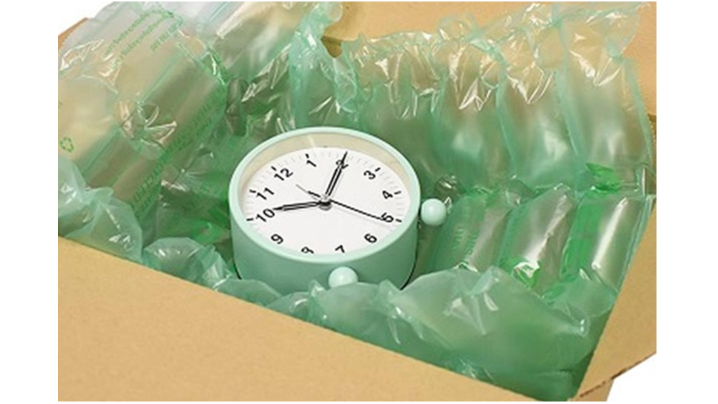
Air pillows deliver remarkable storage efficiency that fundamentally changes warehouse space utilisation. A single 15 cubic foot storage bag accommodates approximately 750 pre-inflated air pillows measuring 100mm x 200mm, representing a storage density that bubble wrap can’t match. For businesses operating in high-rent areas or facing space constraints, this efficiency translates directly into cost savings and operational flexibility.
The compact storage format reduces receiving frequency and transportation costs whilst freeing valuable warehouse space for inventory or other operational needs. Many UK businesses find that switching to air pillows allows them to either reduce their warehouse footprint or accommodate increased inventory without facility expansion.
2. How On-Demand Systems Reduce Labour and Improve Efficiency
Modern air pillow machines connect directly to packing stations, enabling just-in-time production that eliminates waste whilst improving efficiency. Workers create void fill exactly when needed, reducing preparation time and minimising material handling. This streamlined approach typically reduces packing time by 25-40% compared to bubble wrap application methods.
The automation potential of air pillow systems appeals particularly to high-volume operations where labour efficiency directly impacts profitability. Equipment ranges from compact tabletop units suitable for smaller operations to automated systems producing thousands of pillows hourly for major e-commerce facilities.
3. When Air Pillows Fall Short
Air pillows can’t provide direct surface protection, making them unsuitable for items requiring cushioning against scratches or surface damage. Their primary function involves void filling and movement prevention rather than impact absorption directly against product surfaces. Additionally, equipment dependency creates operational vulnerabilities when machines malfunction or during power outages, potentially disrupting packing operations without backup systems in place.
Bubble Wrap: Superior Protection Standards
1. Direct Cushioning for High-Value Items
Bubble wrap’s air-filled bubbles create a cushioning barrier that absorbs impact and distributes pressure across product surfaces. This direct-contact protection proves particularly valuable for fragile items where even minor impacts could cause significant damage. The customisable protection level allows businesses to select appropriate bubble sizes – in other words, small 3/16″ bubbles for surface protection against scratches, or larger 1/2″ bubbles for superior shock absorption.
The conformable nature of bubble wrap enables it to wrap irregularly shaped items effectively, providing tailored protection that air pillows can’t achieve. This versatility makes bubble wrap necessary for shipping antiques, artwork, scientific instruments, and luxury goods where presentation quality matters as much as structural integrity.
2. The Hidden Costs You’re Missing
Bubble wrap’s pre-inflated format creates substantial storage challenges, with standard pallets occupying 30-40 cubic feet of warehouse space. This storage inefficiency increases inventory carrying costs and creates logistical complications for space-constrained operations. Labour intensity represents another significant cost factor, as properly wrapping items requires considerably more time than void filling with air pillows.
Environmental considerations also impact bubble wrap’s long-term viability. Despite technical recyclability, a significant proportion of bubble wrap is not recycled through household collections and therefore often ends up in landfills or incineration, due to limited residential recycling options, creating potential compliance issues as UK environmental regulations become increasingly stringent.
Cost Breakdown: What UK Businesses Actually Pay
1. Material Costs: £4.95 vs £11.50-£58.00 Starting Points
Initial material costs present a complex comparison that goes beyond simple unit pricing. Small bubble wrap rolls start from approximately £4.95, whilst large 100m rolls range from £11 to over £29 depending on specifications. Air pillow packs begin around £11.50 for smaller quantities, scaling to £58.00+ for bulk quantities depending on size and volume. However, these base costs represent only the beginning of the financial equation.
Per-use calculations reveal different dynamics when considering coverage efficiency and application methods. Air pillows typically require fewer units to fill equivalent void spaces, whilst bubble wrap consumption varies significantly based on wrapping techniques and product dimensions.
2. Dimensional Weight Impact on Shipping
Dimensional weight pricing fundamentally alters cost calculations for UK businesses shipping with major carriers. Air pillows weigh significantly less than equivalent bubble wrap coverage, creating substantial shipping cost advantages for high-volume operations. A case study involving a UK online retailer demonstrated 15% shipping cost reductions after switching from bubble wrap to air pillows for void filling applications.
The weight differential is particularly pronounced for larger packages where dimensional weight limits often determine shipping charges. Businesses shipping electronics, clothing, or other lightweight but bulky items frequently find that air pillow systems pay for themselves through combined material, shipping, and storage savings within 6-12 months.
3. Understanding Your Return on Investment
Small to medium enterprises typically offset initial air pillow machine investments through combined material, shipping, and storage savings within 6-12 months. The ROI calculation must include equipment costs, ongoing film expenses, labour efficiency gains, and warehouse space savings. Businesses shipping more than 300 packages monthly generally achieve positive returns faster due to labour efficiency improvements.
However, ROI calculations vary significantly based on product fragility, package sizes, and shipping volumes. Operations requiring extensive surface protection may find bubble wrap more cost-effective despite higher material and shipping expenses, particularly when product damage costs exceed packaging savings.
Which Solution Fits Your Operation
1. High-Volume E-commerce: Air Pillows Win
E-commerce operations shipping durable goods benefit most from air pillow systems through combined labour efficiency, storage savings, and shipping cost reductions. The void-filling capability suits most consumer electronics, clothing, books, and household items that require movement prevention rather than direct cushioning. Operations processing hundreds of daily orders typically see immediate productivity improvements that justify equipment investments.
2. Fragile Goods: Bubble Wrap Required
Products requiring surface-level protection mandate bubble wrap regardless of cost considerations. Glassware, ceramics, artwork, and precision instruments benefit from direct cushioning that air pillows won’t provide. Businesses shipping these items often combine bubble wrap for direct protection with air pillows for additional void filling, creating layered protection systems.
3. Hybrid Approach for Maximum Protection
Many successful UK operations implement hybrid strategies utilising both materials strategically. Direct product wrapping with bubble wrap provides surface protection, whilst air pillows fill remaining void spaces efficiently. This combination delivers optimal protection whilst managing costs through selective application of each material’s strengths. The approach is particularly effective for businesses shipping diverse product ranges requiring different protection levels.
Find Your Optimal Solution Today
The choice between air pillows and bubble wrap ultimately depends on balancing protection requirements, operational efficiency, and cost considerations specific to each business model. UK logistics managers must evaluate their product mix, shipping volumes, and facility constraints when selecting protective packaging strategies. Success requires understanding that neither solution represents a universal answer; instead, the optimal approach often combines both materials strategically.
Testing different approaches with sample shipments provides valuable data for informed decision-making whilst minimising risk during transition periods. Many businesses find that piloting air pillow systems alongside existing bubble wrap operations reveals unexpected efficiency gains and cost savings opportunities.
Globe Packaging
Unit 5, Caxton Trading Estate
Hayes
Middlesex
UB3 1AP
United Kingdom