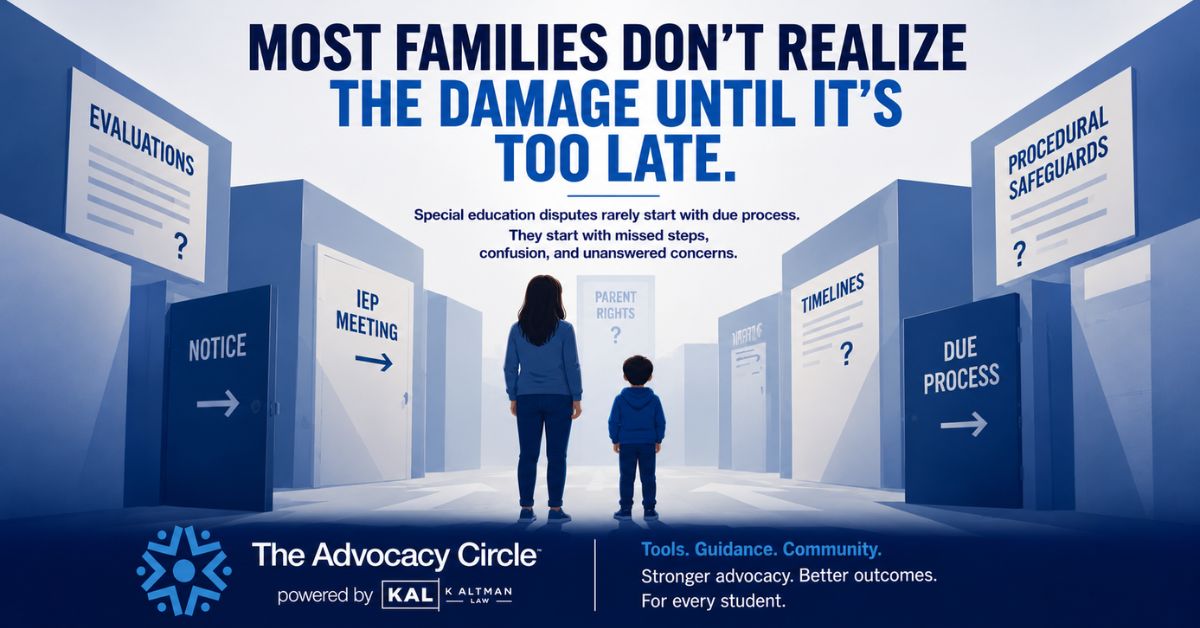
Families shouldn’t need a law degree to protect their child’s education. The system is failing them long before any dispute begins.
WASHINGTON, DC, UNITED STATES, May 21, 2026 /EINPresswire.com/ — A recent report from Disability Scoop describes a growing policy discussion in which some states have shifted, or are considering shifting, the burden of proof in certain special education due process matters from parents to school districts. The article specifically reports on Louisiana House Bill 342 and notes that several states already place the burden on districts in these cases. You can read about it here.
While legislative approaches vary by jurisdiction and bill status must be confirmed before publication, the broader takeaway is clear: procedural rules matter, and families often need more accessible information about how the system works before disputes become formal.
The Advocacy Circle is not commenting on the merits of any individual case or predicting the outcome of any pending legislation. Instead, the organization is emphasizing a broader principle that applies across jurisdictions: when special education procedures are difficult to understand, families benefit from earlier access to practical, educational support.
Why This Matters Beyond Formal Disputes
Most families do not begin with due process. They begin with meetings, questions, notices, evaluations, and follow-up communications. That is why preparation matters long before a conflict escalates.
“Policy debates like this one can bring needed attention to how difficult procedural systems can feel for families,” said Dan Rothfeld, Chief Operating Officer of The Advocacy Circle. “Regardless of the rules in a particular state, families benefit from understanding timelines, keeping organized records, and preparing clear written concerns early in the process.”
Trusted parent guidance reinforces that point. The Center for Parent Information and Resources recommends putting requests in writing and keeping copies of communications. Understood.org also emphasizes reading parental rights materials and preparing written concerns before IEP meetings.
What This Means for Families:
• review procedural safeguards and parent rights materials in their state;
• maintain organized records of evaluations, notices, and school communication;
• prepare written concerns before meetings;
• seek educational support that helps make the process easier to understand.
The Advocacy Circle encourages families to focus on clarity, organization, and informed participation while seeking professional guidance where appropriate for specific situations.
About The Advocacy Circle
The Advocacy Circle is an education advocacy and family support organization that provides practical tools, training, and AI-supported guidance to help families navigate special education and related advocacy challenges. The organization focuses on process clarity, parent empowerment, and privacy-conscious support.
Disclaimer: This press release is for general informational purposes only. It is not legal advice. Legislative and procedural rules vary by jurisdiction, and families should seek professional advice where appropriate.
Dan Rothfeld
The Advocacy Circle
+1 947-366-0021
danrothfeld@theadvocacycircle.com
Visit us on social media:
LinkedIn
Instagram
Facebook
YouTube
Legal Disclaimer:
EIN Presswire provides this news content “as is” without warranty of any kind. We do not accept any responsibility or liability
for the accuracy, content, images, videos, licenses, completeness, legality, or reliability of the information contained in this
article. If you have any complaints or copyright issues related to this article, kindly contact the author above.

Media gallery