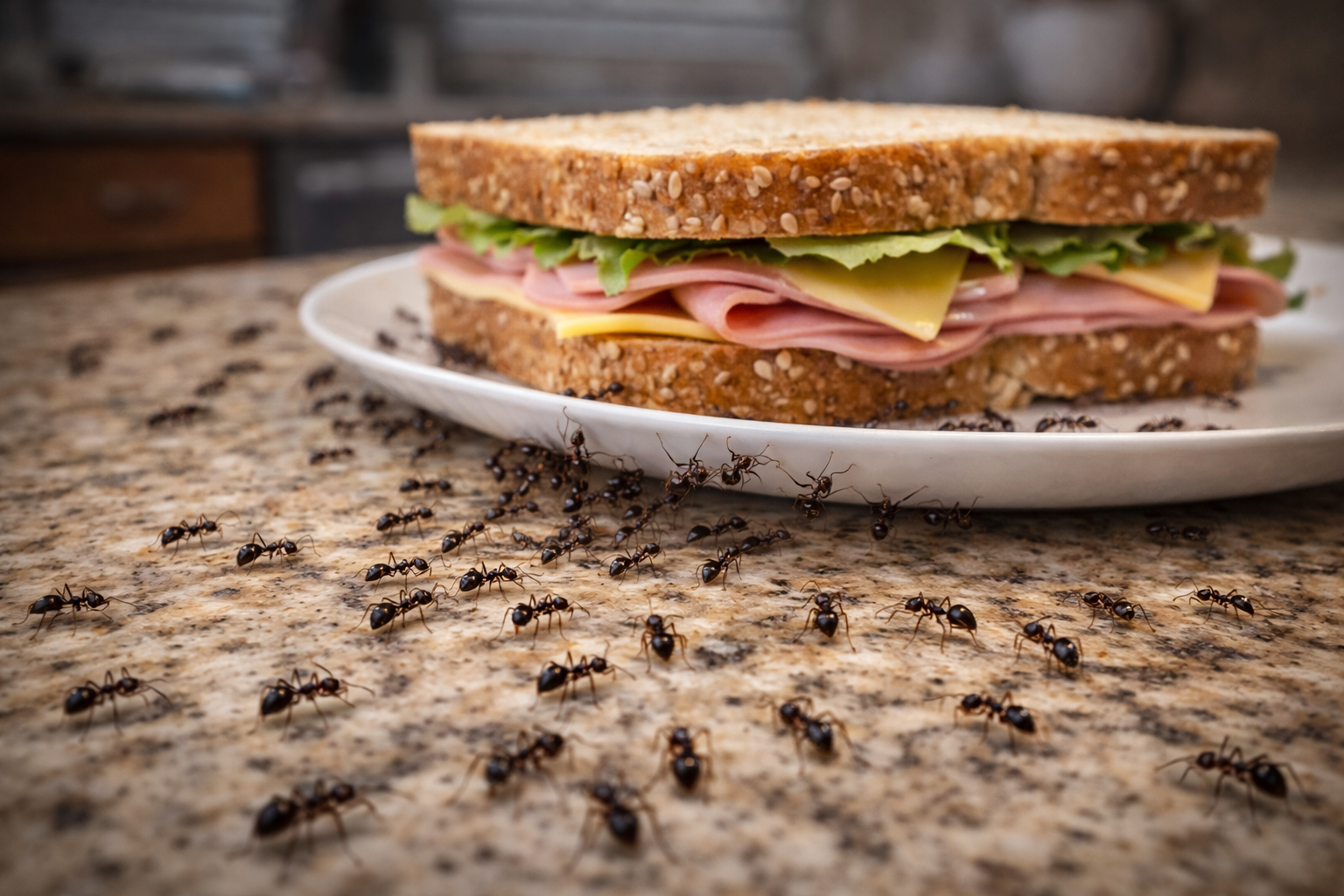
Record-dry spring conditions across Hampton Roads force local ant colonies indoors for water, sparking a surge in summer home invasions.
VIRGINIA BEACH, VA, UNITED STATES, May 6, 2026 /EINPresswire.com/ — Following one of the driest spring seasons on record, experts are warning Hampton Roads residents to prepare for a significant surge in ant activity this summer. Data from the U.S. Drought Monitor indicates that much of the region—including Virginia Beach, Chesapeake, and Newport News—experienced its 20th driest March in over 130 years, with precipitation levels falling nearly 2.7 inches below normal for the first quarter of 2026.
While dry weather typically slows down most garden pests, it has the opposite effect on ant populations. As the sandy soils of the Coastal Plain lose moisture, local ant colonies are forced to venture further from their nests in a desperate search for hydration, leading them directly into area kitchens, bathrooms, and crawlspaces.
The Science Behind the Surge:
Ants are highly sensitive to moisture gradients. In a typical Virginia spring, the soil provides enough dampness to sustain a colony. However, the prolonged dry spell of 2026 has dehydrated the natural environment.
“When the ground dries out, ants don’t just disappear; they pivot,” says local entomological data. “Your home becomes a giant oasis. The condensation on a cold pipe, a damp sponge, or even a pet’s water bowl can be detected by an ant colony from dozens of yards away.”
Local Species to Watch
Hampton Roads is home to several species that react uniquely to drought:
– Odorous House Ants: Often called “sugar ants,” these are the most common kitchen invaders. They are known for the rotten coconut smell they emit when crushed.
– Pavement Ants: These ants thrive in the cracks of hot driveways in Norfolk and Portsmouth. As the pavement hits record summer temperatures, they move under the cool shade of home foundations.
– Carpenter Ants: While they don’t eat wood, they tunnel through it. They are particularly drawn to the structural moisture often found in the older homes of Old Wythe or Ghent.
Fast Ant Facts for Homeowners
Pheromone GPS: Ants leave invisible chemical trails for their sisters to follow. If you see one ant, a “scout” has likely already marked your home as a viable water source.
Colony Size: A single Argentine Ant colony can form “super-colonies” that stretch across multiple yards, making them particularly difficult to manage during a drought.
Hydration Seekers: Ants can survive for weeks without food, but only days without water. This is why they are currently bypassing pantries and heading straight for sinks.
Frequently Asked Questions (FAQ)
1. Why is the dry weather making ants come inside more than rain does?
While heavy rain can flood nests and force ants out, extreme drought creates a resource vacuum. In Hampton Roads’ current dry state, the “hydro-gradient” (the difference in moisture between your yard and your home) is at an all-time high, pulling ants inside like a magnet.
2. Are the ants I see in my kitchen dangerous?
Most common local species, like Odorous House Ants, are considered “nuisance pests” and do not sting or carry major diseases. However, they can contaminate food. The exception is the Red Imported Fire Ant, which is increasingly common in Suffolk and Chesapeake and can deliver painful stings.
3. Can these ants actually damage my house?
Yes, if they are Carpenter Ants. Unlike other species, they seek out moist or decaying wood to build nests. If the dry spring has led to any internal leaks or condensation issues in your walls, these ants can cause structural damage over time.
4. Why do ants keep returning to the same spot even after I clean?
Cleaning with standard soap often isn’t enough to break the pheromone trail. Ants use these chemical “roads” to navigate. If the trail isn’t neutralized with an enzymatic cleaner or vinegar solution, new scouts will quickly find the same path back to your counter.
5. What is the most effective way to prevent them during a drought?
Focus on “exclusion” and “moisture control.” Seal small cracks around windows with caulk, ensure your crawlspace is dry, and—most importantly—don’t leave standing water in sinks or pet bowls overnight. During a dry Hampton Roads summer, water is a more powerful attractant than sugar.
George Pilkington
Universal Pest & Termite, Inc.
email us here
Visit us on social media:
Instagram
Facebook
YouTube
TikTok
X
Legal Disclaimer:
EIN Presswire provides this news content “as is” without warranty of any kind. We do not accept any responsibility or liability
for the accuracy, content, images, videos, licenses, completeness, legality, or reliability of the information contained in this
article. If you have any complaints or copyright issues related to this article, kindly contact the author above.

Media gallery